

)


)


The invisible rules of agentic AI
Now that we are completely immersed in the era of Large Language Models and Agentic AI, our industry needs to redefine what 'good' actually looks like. It’s no longer just about checking a box to see if a bot successfully used an API, matched the golden' answer, or retrieved the correct data. It’s about comprehensive, continuous testing to ensure these systems respect human social dynamics. Because even in this new era, conversational quality and trust are non-negotiable.
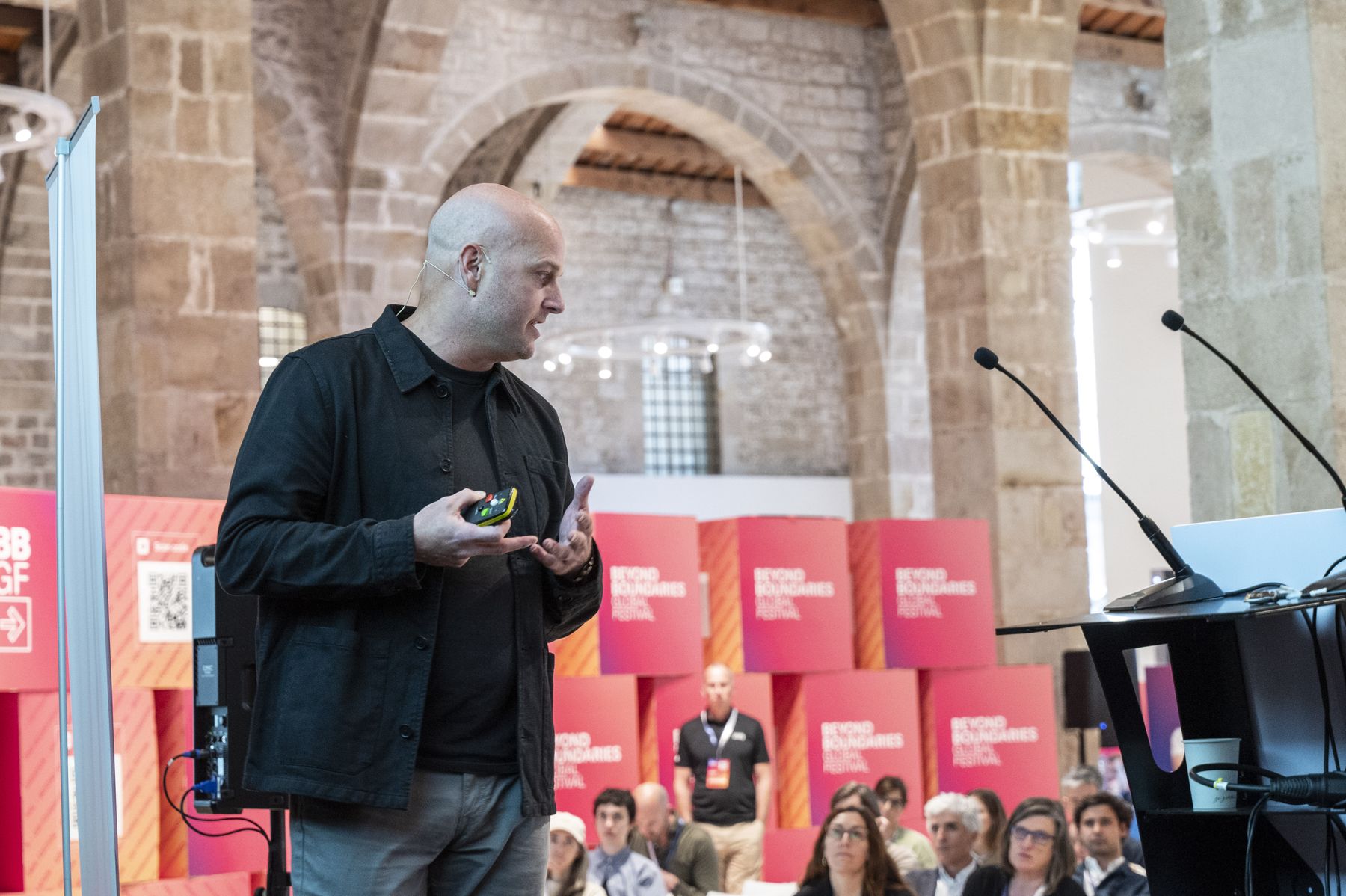
It was exactly this human-first mindset that echoed through the beautiful, historic arcades of the Museu Marítim during the Beyond Boundaries Festival in Barcelona (April 28–30). Inspired by those sessions, I’ve written a series of blog posts capturing the keynotes that best define this new era of AI.
David Padgett
Daniel Padgett, Head of Conversation Design at Google DeepMind, turned his keynote into a masterclass on what it actually takes to hold a successful conversation. He reminded us of a fundamental truth: Conversation is much more than turn-taking.
In human relationships, a conversation isn't just an exchange of information. It’s a constant dance between people. And when you look at this through the lens of the Conversational Capital framework, Daniel’s talk gave us the playbook we need to maintain our Trust Ledgers.
Here are the three takeaways I took from his masterclass:
1. The common ground
We looked at an example where two of Daniel’s colleagues shared just 10 words. From that tiny interaction, the audience could instantly conclude that one colleague had a bad day and needed an alcoholic drink, and the other knew the perfect spot to go.
It looked like this:
A: ‘I need a drink’
B: ‘I heard the Eagle is good’
What happened here is that, without even realizing it, the colleagues established common ground: shared knowledge, experiences, and current context that both speakers agree on and update at every single step of the interaction. Humans do that constantly during a conversation.
And because this is a uniquely human trait, it isn’t something an AI does naturally, which means we have to design for it. Daniel shared three tips to achieve this:
-
Establish a clear common ground between the user and the AI.
-
Leverage that common ground by teaching machines how to make relevant contributions to the conversation.
-
Focus time and effort on robust error repair strategies.
Failing to do this will quickly drain customer trust. Think about an agent that forgets a detail a user mentioned just two turns ago, or completely ignores the context of why they are reaching out. It forces the customer to repeat themselves. Every time a human has to rebuild common ground with a machine, it’s a painful withdrawal from your Conversational Capital.
2. Data dumping
Just because an LLM can process a lot of data, it doesn't mean it should dump it on the user when answering a question. Daniel highlighted the need for finding that exact sweet spot where the agent's response perfectly matches the user’s need, state, and knowledge level.
Make sure your agent doesn’t over-explain, drift off-topic, or generate generic, hallucinated responses because it got lost in its own prompt after being given too much irrelevant data.
3. A make-or-break moment
It came as a surprise to me that the exact moment an error happens is actually your biggest opportunity to build Conversational Capital. If you design robust repair strategies, and your agent handles a misunderstanding elegantly, remembering the context and guiding the user back on track, it doesn’t just save the interaction. It deposits a significant amount of trust back into the ledger.
No conversation is perfect. Humans trip over their words, change their minds mid-sentence, and misunderstand each other all the time. But we are masters of repair and if we design our agents well, they can be too.
